


XR Serie
Programmable DC Power Supply
- Größe
- 2U
- Leistung
- 2 kW to 10 kW
- Gefertigt
- USA
- Bauzeit
- 10-12 weeks
Die 2U XR -Serie ergänzt die 1U -SL -Serie, indem sie in einem 2U -Paket bei 2 kW, 4 kW, 6 kW, 8 kW und 10 kW Hochspannung (mehr als 1500 VDC) und hohe Strom (mehr als 250 ADC) in einem 2U -Paket bereitstellen. Die XR-Serie verfügt über den höchsten Spannungsbereich im Produktangebot von Magna-Power, bis zu 10.000 VDC und hohen Strommodellen bis zu 600 DC, wobei alle die Signature-Stromverarbeitung des Unternehmens verwendet werden, um eine robuste Stromumrechnung zu liefern. Darüber hinaus ermöglichen die Programmierung und Überwachungsniveaus mit hoher Genauigkeit das Vertrauen in die Stromversorgungsmessungen und beseitigen die Notwendigkeit von externen Stromversorgungsmessgeräten.



Mit einem Experten sprechen


Fast, accurate power delivery with controls and options tailored to your needs
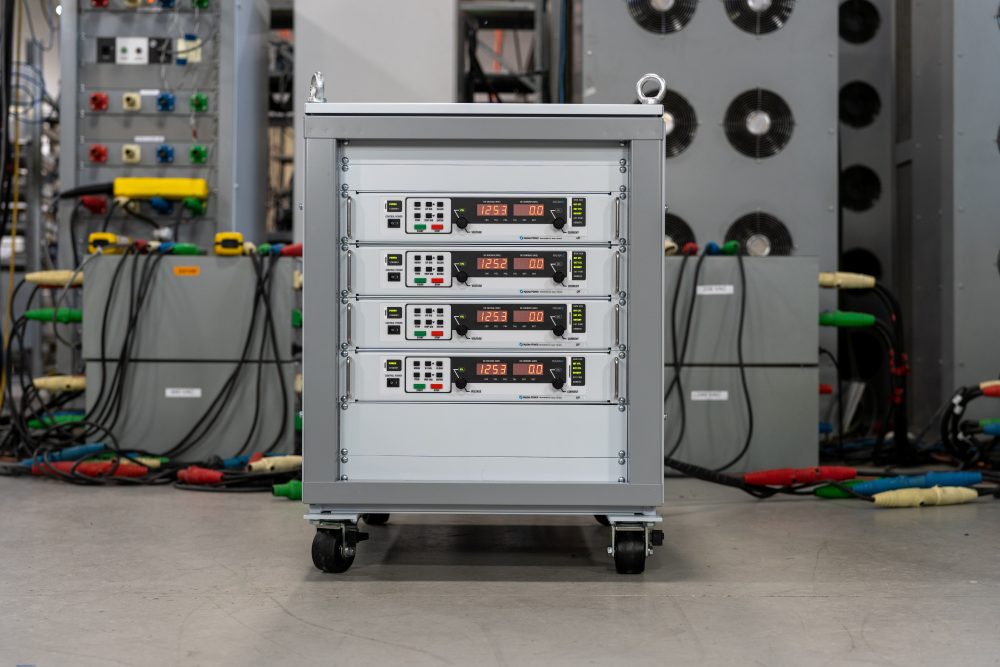
Hochspannungs- und Hochstromleistung in 2U
Präzise, stabile Ausgangsleistung für anspruchsvolle Lasten.
Die XR Serie ergänzt die 1U SL Serie durch Erweiterung auf 2–10 kW Modelle für Hochspannung von 2000 Vdc bis 10.000 Vdc und Hochstrom von 375 Adc bis 600 Adc – alles in einem kompakten 2U-Gehäuse. Im Konstantspannungs- oder Konstantstrommodus mit automatischer Überkreuzung liefert die XR Serie schnelle Transientenerholung, ±0,075 % Programmiergenauigkeit für Spannung und Strom sowie ±0,2 % Messgenauigkeit – für zuverlässige Steuerung und Rückmessung ohne externe Messgeräte.
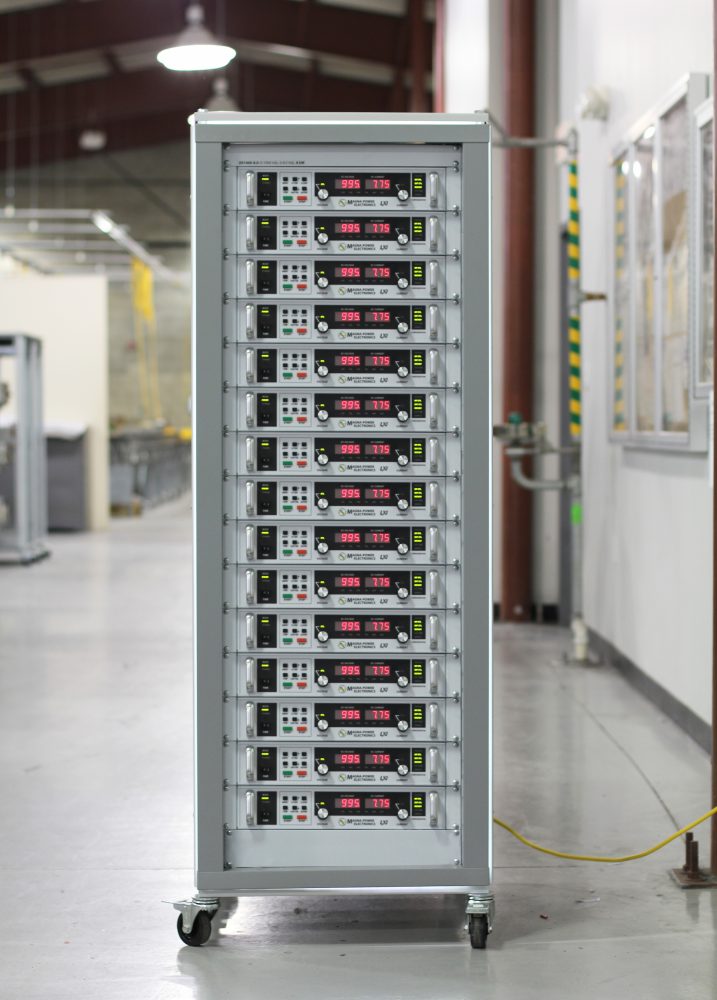
Konfiguriert nach Bestellung mit integrierten Optionen
Umfangreiche Standardfunktionen, bei Bedarf erweiterbar.
Die XR Serie beginnt mit einer starken Basis: SCPI über RS232, isolierter 37-poliger Benutzer-I/O, LabVIEW- und IVI-Treiber sowie Remote Interface Software inklusive. Wenn Anwendungen mehr erfordern, passen vollständig integrierte Optionen Leistung, Konnektivität und Mechanik an – ohne externe Gehäuse oder provisorische Verkabelung.
- Standard-SCPI-Computersteuerung, RS232, isolierter 37-poliger analoger/digitaler I/O, LabVIEW- & IVI-Treiber, RIS-Software.
- Hohe Anstiegsrate am Ausgang (+HS) für höhere Bandbreite und schnellere programmierte Anstiegszeiten.
- Konnektivitätsoptionen LXI TCP/IP Ethernet (+LXI) und IEEE-488 GPIB (+GPIB).
- Gehärtet (+RUG) für MIL-STD Stoß- & Vibrationsfestigkeit
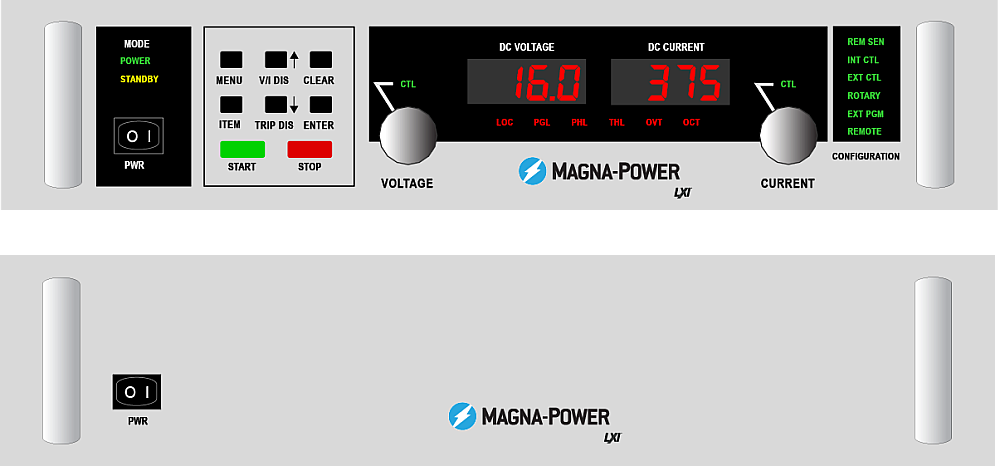
Stufenlose Bedienung über das Frontpanel mit optionaler Blindabdeckung
Direkter Zugriff, wo gewünscht – verborgen, wo nicht benötigt.
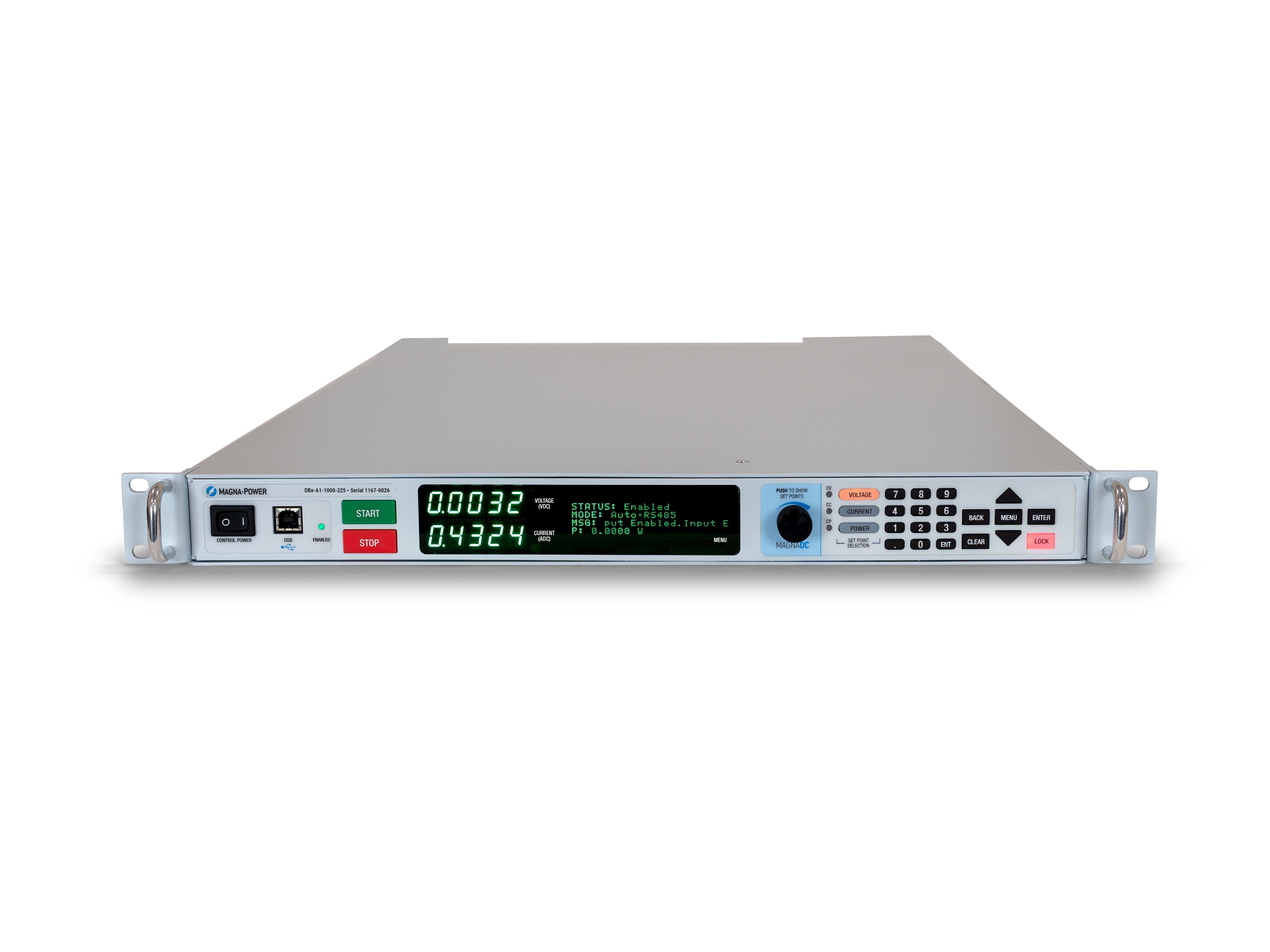
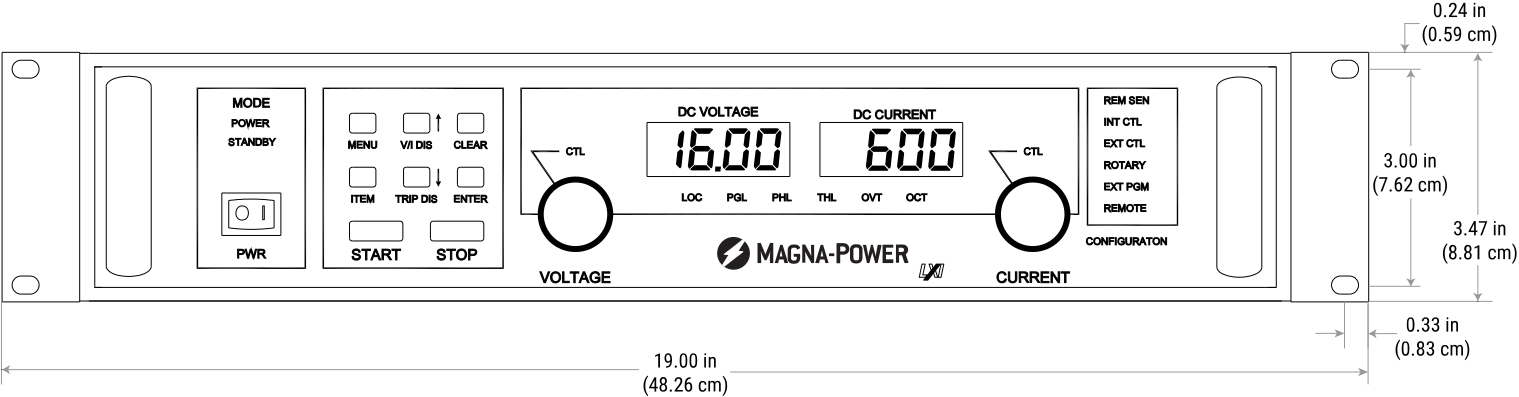
Das Standard-XR-Frontpanel bietet Dreh- und Tastenbedienung, helle digitale Messwertanzeigen und übersichtliche Statusanzeigen, sodass Bediener Sollwerte einstellen, die Stromversorgung starten und stoppen sowie den Systemzustand auf einen Blick erfassen können. Für OEMs und Produktionsanlagen entfällt beim optionalen Blind-Frontpanel (C-Version) die lokale Bedienung vollständig, während die volle Steuerung über Kommunikationsschnittstellen und den rückseitigen 37-poligen Benutzer-I/O erhalten bleibt – für sichere, aufgeräumte und bedienergeschützte Systeme.
Rugged by design: safety + reliability, as you'd expect from Magna-Power.

Zuverlässige stromgespeiste Leistungsverarbeitung
Robust durch Design: selbstschützende Topologie für maximale Betriebszeit.
The SLx Series uses a high-frequency, current-fed architecture that adds a control stage beyond conventional voltage-fed designs. This topology inherently limits fault energy—avoiding fast-rising current spikes and magnetic core saturation so the supply self-protects and your load stays safe. Paired with state-of-the-art SiC power semiconductors, SLx delivers class-leading power density, efficiency, and reliability, including continuous full-power operation up to 50°C ambient.
- Current-fed architecture with an added control stage vs. voltage-fed.
- Inherent surge immunity—no current spikes or core saturation.
- Self-protecting behavior under fault conditions.
- SiC devices for high density and efficiency; full power to 50°C.

Mehrstufige Sicherheit, Verriegelung & Not-Aus
Standardmäßig programmierbare Grenzwerte plus festverdrahtete Abschaltung.
Eine Sanftanlaufstufe hält den Einschaltstrom unter dem Dauerstrom, während die integrierte Diagnose Netz-, Temperatur- und interne Bedingungen überwacht. Bei einem Fehler stoppt eine sofortige Einmalauslösung (OSHT) den Wechselrichter. Fehler werden auf dem Frontdisplay und über SCPI/Modbus zur schnellen Fehlersuche angezeigt.
- Sanftanlauf begrenzt den Einschaltstrom; die Wechselstromaufnahme bleibt unter dem Volllast-Strom.
- Programmierbare Auslösungen: Überspannung, Überstrom, Überleistung.
- Temperaturüberwachung an Kühlkörper und Ausgangskondensatoren.
- 5V-Verriegelungseingang für potentialfreien Kontakt, selbsthaltende Sperrung (Steuerspannung bleibt erhalten).
- 24 V Not-Aus umgeht die Logik und unterbricht die Wechselspannung; vollständige Hardware-Abschaltung.
From lab scripts to factory PLCs, flexible programming & integration.
Softwareintegration leicht gemacht
Lesbare Befehle, schnelle Ergebnisse – funktioniert mit jeder Programmiersprache.
MagnaDC-Netzgeräte bieten eine übersichtliche, textbasierte API mit nativem SCPI, einer ASCII-basierten Befehlssprache, die über Socket-Kommunikation gesendet wird. Über 40 gut dokumentierte Befehle decken Start/Stopp, Sollwerte für Spannung, Strom, hochpräzise Messungen und die vollständige Konfiguration ab – so gelangen Ihre Skripte und Systeme schnell vom Proof-of-Concept in die Produktion.
- SCPI-Befehlssätze mit konsistentem Verhalten.
- Start/Stopp & Schutzfunktionen: Ausgang aktivieren, Auslösegrenzen setzen, Status abfragen.
- Hochpräzise Messwerte: Spannung, Strom, Leistung und Sense-Rückmeldung.
- Entwicklerorientierte Dokumentation & Beispiele.
import serial
magnaPower = serial.Serial(port='COM4', baudrate=19200)
magnaPower.write('*IDN?\n'.encode())
print magna_power.readline()
magnaPower.write('VOLT 0\n'.encode())
magnaPower.write('CURR 0\n'.encode())
magnaPower.write('OUTP:START\n'.encode())
magnaPower.write('VOLT 270\n'.encode())
currSetPoints = [50, 100, 150, 250]
for currSetPoint in currSetPoints:
    print 'Setting Current to %s A' % currSetPoint
    magnaPower.write('CURR {0}\n'.format(currSetPoint).encode())
    magnaPower.write('MEAS:VOLT?\n'.encode())
    print magnaPower.readline()
    time.sleep(20)
magnaPower.write('OUTP:STOP\n'.encode())
magnaPower.close()
magna_power = serial('COM4', 'BaudRate', 19200);
fopen(magnaPower);
fprintf(magnaPower,'*IDN?');
idn = fscanf(magnaPower);
fprintf(magnaPower,'VOLT 0');
fprintf(magnaPower,'CURR 0');
fprintf(magnaPower,'OUTP:START');
fprintf(magnaPower,'VOLT 270');
for currSetPoint in [50, 100, 150, 250]
    display('Setting Current to '+currSetPoint+' A');
    fprintf(magnaPower, 'CURR '+currSetPoint);
    fprintf(magnaPower,'MEAS:VOLT?');
    display(fscanf(magnaPower));
    pause(20);
end
#include <stdio.h>
#include <stdint.h>
#include <string.h>
#include <windows.h>

int main()
{
    printf("Opening connection.\n");

    uint8_t recvBuffer[sizeof(uint8_t) * 256];
    memset(recvBuffer, 0, 256);

    // Choose the serial port name.
    // COM ports higher than COM9 need the \\.\ prefix, which is written as
    // "\\\\.\\" in C because we need to escape the backslashes.
    const char* device = "\\\\.\\COM4";

    // Choose the baud rate (bits per second).
    uint32_t baud_rate = 19200;

    HANDLE port = open_serial_port(device, baud_rate);
    if (port == INVALID_HANDLE_VALUE) { return 1; }

    char* scpiCmd = (char*)"*IDN?\n";
    size_t cmdLen = strlen(scpiCmd);
    int result = write_port(port, (uint8_t*)scpiCmd, cmdLen);
    if (result < 0)
        return -1;

    result = read_port(port, recvBuffer, 256);
    printf("Sent: %s\nReceived: %s\n", scpiCmd, recvBuffer);

    scpiCmd = (char*)"VOLT 0\n";
    cmdLen = strlen(scpiCmd);
    result = write_port(port, (uint8_t*)scpiCmd, cmdLen);
    if (result < 0)
        return -1;

    scpiCmd = (char*)"CURR 0\n";
    cmdLen = strlen(scpiCmd);
    result = write_port(port, (uint8_t*)scpiCmd, cmdLen);
    if (result < 0)
        return -1;

    scpiCmd = (char*)"OUTP:START\n";
    cmdLen = strlen(scpiCmd);
    result = write_port(port, (uint8_t*)scpiCmd, cmdLen);
    if (result < 0)
        return -1;

    scpiCmd = (char*)"VOLT 270\n";
    cmdLen = strlen(scpiCmd);
    result = write_port(port, (uint8_t*)scpiCmd, cmdLen);
    if (result < 0)
        return -1;

    char setPoints[4][5] = {"50", "100", "150", "200"};
    char setPointBuffer[40];
    scpiCmd = (char*)"MEAS:VOLT?\n";

    for (int i = 0; i < 4; i++)
    {
        sprintf(setPointBuffer, "CURR %s\n", setPoints[i]);
        printf("Setting current to %s A\n", setPoints[i]);
        cmdLen = strlen(setPointBuffer);
        result = write_port(port, (uint8_t*)setPointBuffer, cmdLen);
        if (result < 0)
            return -1;
        memset(recvBuffer, 0, 256);
        result = read_port(port, recvBuffer, 256);
        printf("Received: %s\n", recvBuffer);
        Sleep(20000);  // 20000ms = 20s
    }

    scpiCmd = (char*)"OUTP:STOP\n";
    cmdLen = strlen(scpiCmd);
    result = write_port(port, (uint8_t*)scpiCmd, cmdLen);
    if (result < 0)
        return -1;

    CloseHandle(port);

    printf("Connection closed.\n");
    return 0;
}
using System;
using System.IO.Ports;
using System.Threading;

namespace SerialCommunicationInCSharp
{
  public class Program
  {
    static bool _continue;
    static SerialPort serialPort;

    public static void Main(string[] args)
    {
      Thread readThread = new Thread(Read);

      Console.WriteLine("Opening connection.");

      // Create a new SerialPort object with default settings.
      serialPort = new SerialPort("COM4", 19200, Parity.None, 8, StopBits.One);

      // Set the read/write timeouts
      serialPort.ReadTimeout = 500;
      serialPort.WriteTimeout = 500;

      serialPort.Open();
      _continue = true;
      readThread.Start();

      Console.WriteLine("Sending: *IDN?");
      serialPort.WriteLine("*IDN?");

      serialPort.WriteLine("VOLT 0");
      serialPort.WriteLine("CURR 0");
      serialPort.WriteLine("OUTP:START");
      serialPort.WriteLine("VOLT 270");

      string[] currSetPoints = { "50", "100", "150", "250" };
ß
      for(int i = 0; i < currSetPoints.Length; i++)
      {
        serialPort.WriteLine(String.Format("'CURR {0}", currSetPoints[i]));
        serialPort.WriteLine("MEAS:VOLT?");
        Thread.Sleep(20000);
      }

      serialPort.WriteLine("OUTP:STOP");

      Console.WriteLine("Closing connection.");
      _continue = false;
      serialPort.Close();
      }

    public static void Read()
    {
      while (_continue)
      {
        try
        {
          string message = serialPort.ReadLine();
          Console.WriteLine("Received: " + message);
        }
        catch (TimeoutException) { }
      }
    }
  }
}

Externer User I/O für SPS-Steuerung oder PHIL-Simulation
Verdrahten wie ein I/O-Modul – keine zusätzliche Isolation erforderlich.
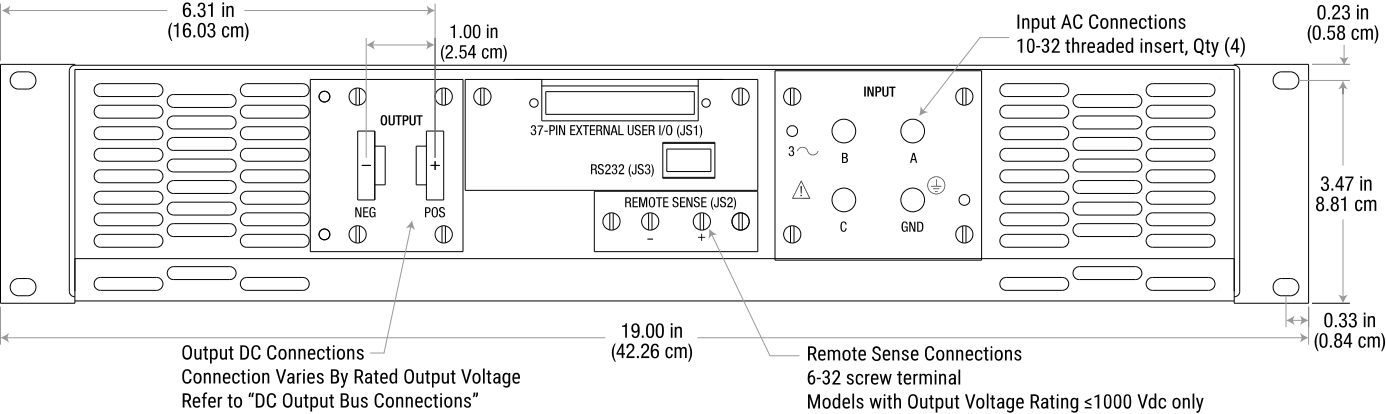
Via the included rear 37-pin User I/O connector, MagnaDC supplies can be fully driven and monitored by external signals or a PLC. Voltage, current, OVT, and OCT set points are programmed with 0–10 V analog inputs, while each diagnostic condition has its own +5V digital status pin. Built-in +2.5V, +5V, and +10V reference rails let you use dry contacts without adding external supplies. All I/O is isolated from the output and referenced to earth ground as standard.
-
0–10 V analog programming for V, I, OVT, and OCT.
-
Per-fault digital outputs: each diagnostic has its own +5V pin.
-
Isolated user I/O referenced to earth ground—no extra isolators.
-
With High Slew Rate Output (+HS), high-bandwidth response and fast rise times support HIL/PHIL simulation applications.
Hochleistungs-Master-Slave-Betrieb
Spannung oder Strom skalieren ohne Leistungseinbußen.
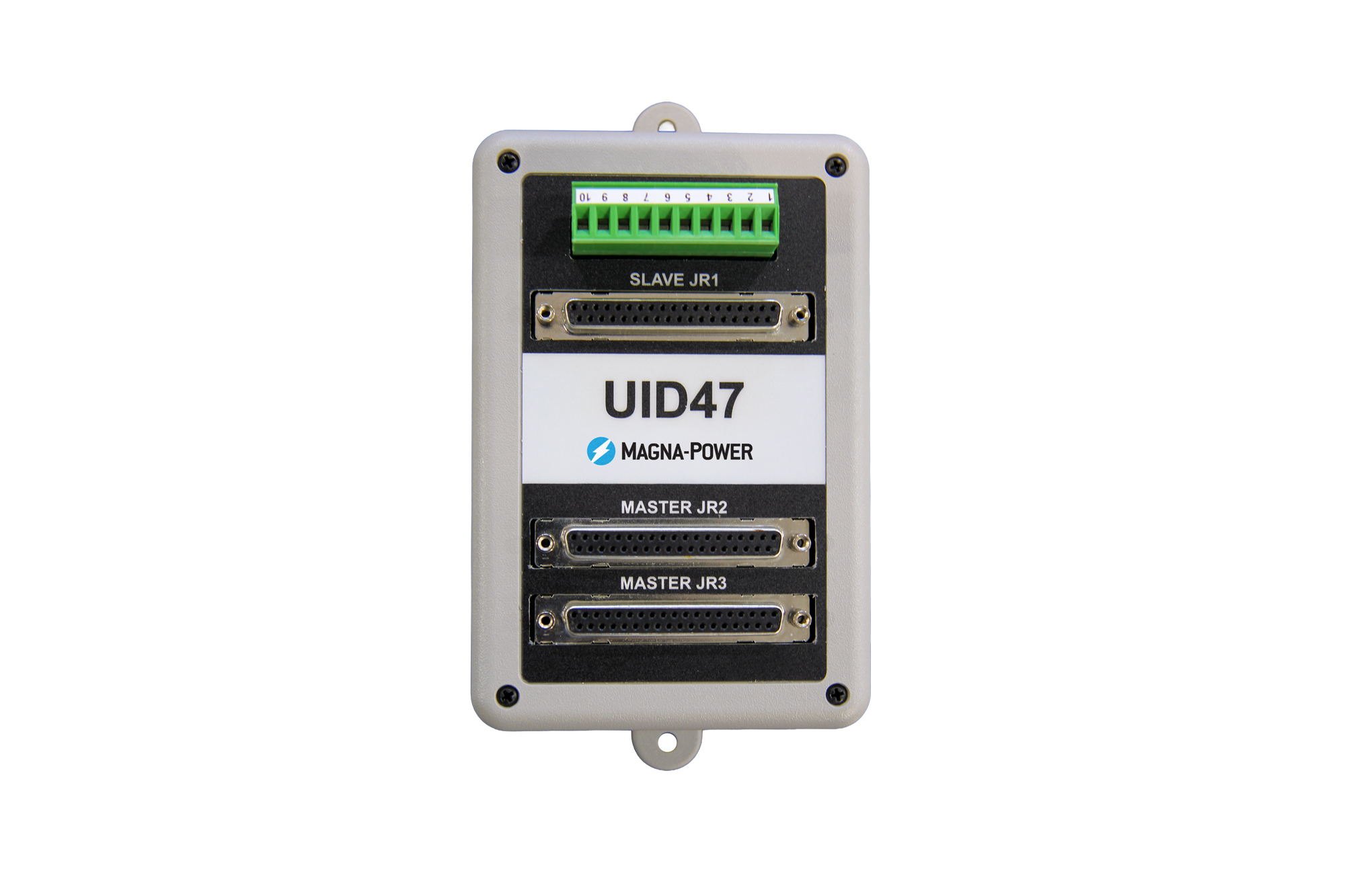
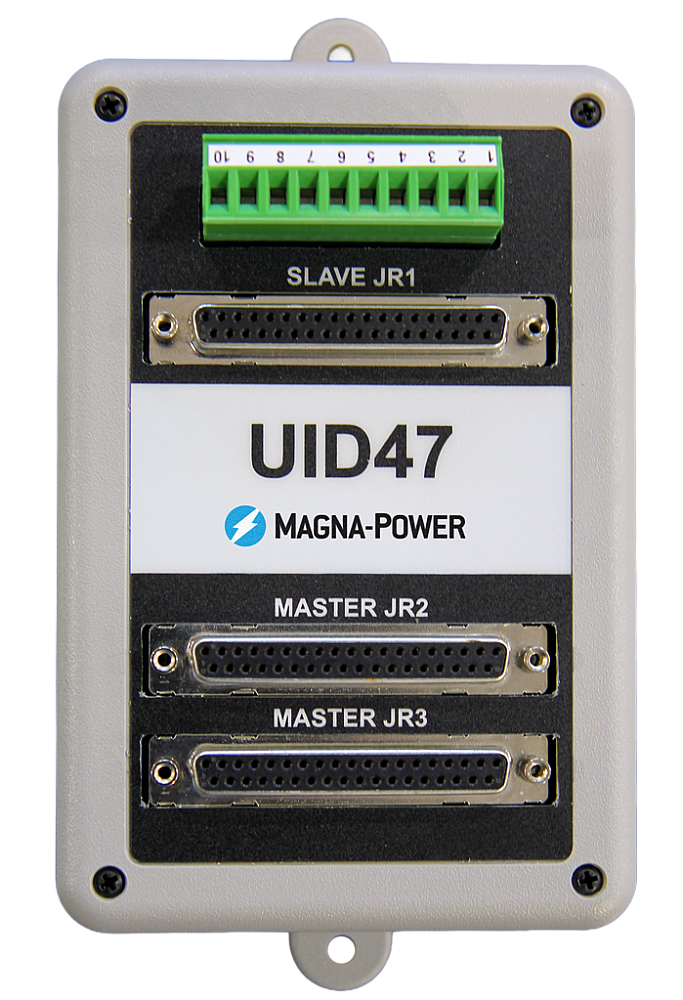
All MagnaDC supplies support master-slave operation, using gate-drive signals from the master when configured for parallel, so the whole stack behaves like a single supply—with one control loop and no noisy long analog references. The optional UID47 accessory simplifies wiring for series or parallel sets with near-equal sharing.
-
Single control loop parallel operation: Master gate-drive to slaves for consistent dynamics.
-
Plug & play with the UID47, enabling parallel or series stacks with current/voltage sharing.
-
Series up to the DC isolation rating without added hardware.
No additional ORing diodes required for parallel operation.
Magna-Power Software, LabVIEW- & IVI-Treiber
Vom virtuellen Bedienfeld bis zur vollständigen Automatisierung – sofort einsatzbereit.
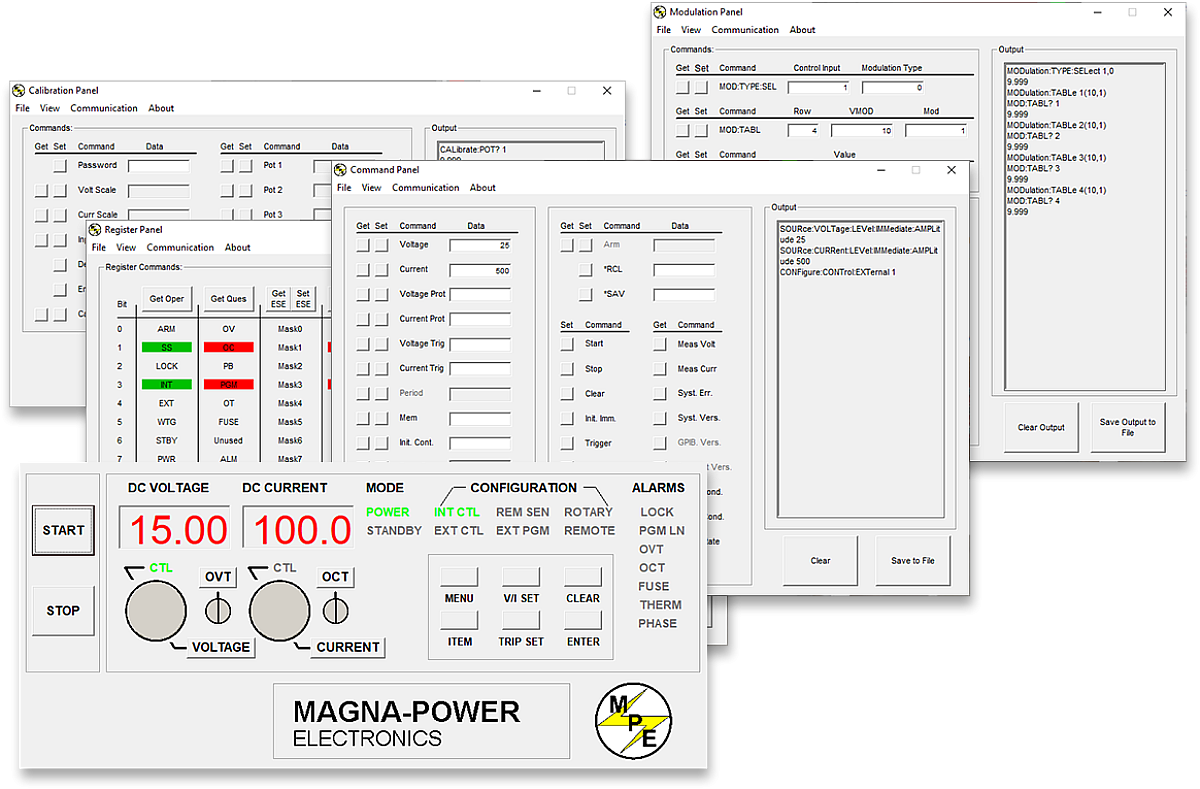
Jedes MagnaDC-Netzteil enthält einen IVI-Treiber und einen NI LabVIEW-Treiber mit einem vollständigen Satz von VIs sowie Beispielprogramme, mit denen Sie in wenigen Minuten mit der Hardware kommunizieren können. Für die direkte Steuerung im Bedienfeld-Stil von einem PC aus bietet die Remote Interface Software von Magna-Power einen umfassenden Einblick in das Netzteil – von Befehlen und Registern bis hin zu Kalibrierung und Firmware.
-
IVI- & NI LabVIEW-Treiber mit vollständigem VI-Satz enthalten.
-
Beispielprogramme für den schnellen Einstieg in Integration und Tests.
-
Remote Interface Software mit:
-
Virtuelles Bedienfeld für manuelle Steuerung
-
Befehlsfeld zum Erkunden und Senden von Befehlen
-
Registerfeld für Live-Statusüberwachung
-
Kalibrierungsfeld für interne digitale Potentiometer
-
Firmware-Feld für Vor-Ort-Upgrades
-
Modulationsfeld zur Emulation nichtlinearer Profile
-
-
Alle Kommunikationsschnittstellen werden software- und treiberübergreifend unterstützt – für ein einheitliches Programmiererlebnis.
State-of-the-art USA manufacturing with worldwide support

Made in the USA
Vertikal integrierte Fertigung für vollständige Qualitätskontrolle.
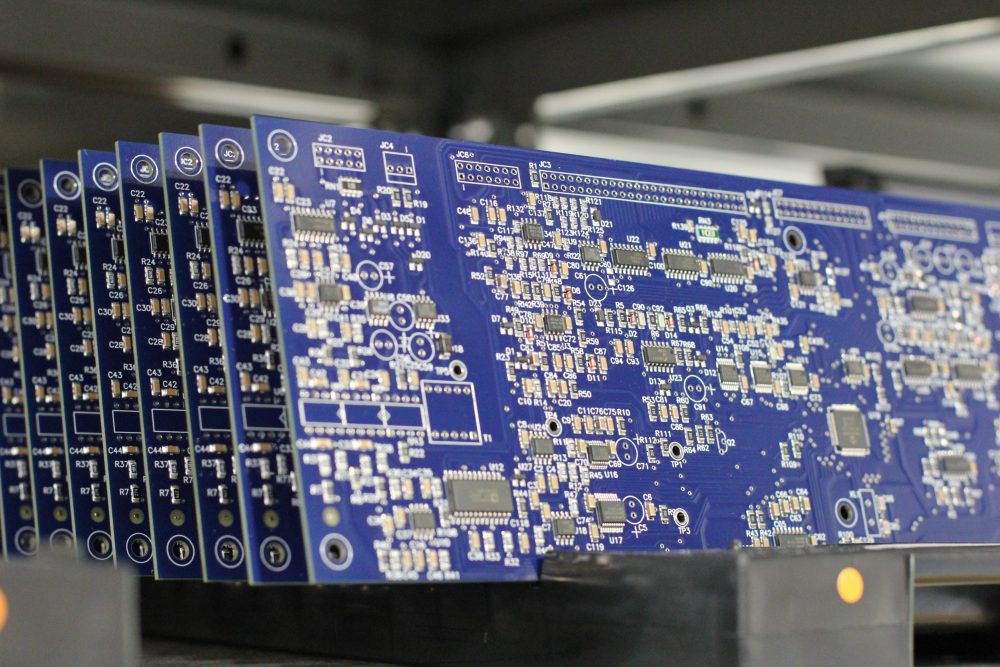
Magna-Power Produkte werden am 73.500 sq-ft großen Hauptsitz von Magna-Power in Flemington, New Jersey, entworfen, gebaut, getestet und gewartet. Metallbearbeitung, Magnetfertigung, PCB-Bestückung und Burn-in erfolgen vollständig im eigenen Haus – für maximale Kontrolle über Qualität, Kosten und Lieferzeiten.
- Made in USA: Entwicklung, Fertigung und Service unter einem Dach.
- Eigenfertigung: Metallbearbeitung, Magnetfertigung, SMT-PCBs und Oberflächenbehandlung.
- Bewährte Zuverlässigkeit: Jedes Gerät wird vollständig getestet, kalibriert und eingebrannt.
Weltweiter Service & OEM-Ersatzteilsupport
Fachwissen ab Werk, Reaktion vor Ort.
Magna-Power unterstützt seine Produkte mit werks- und autorisierten Servicezentren in Nordamerika, Europa, Großbritannien, dem asiatisch-pazifischen Raum, Ostasien und Südamerika – mit werkseitigen Verfahren und Originalteilen, um Geräte innerhalb und außerhalb der Garantie auf die ursprünglichen Spezifikationen zurückzusetzen.
- Globale Abdeckung: Hauptsitz in New Jersey sowie regionale autorisierte Servicezentren.
- Einheitliche Reparaturen: Werksdiagnosen, Arbeitsanweisungen und Systemdiagramme.
- Original-OEM-Teile: Geprüfte Ersatzbaugruppen für planbaren Service mit minimalen Ausfallzeiten.
Modell-Bestellleitfaden
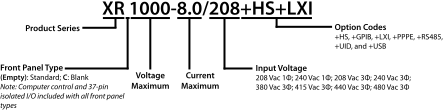
Sowohl für die Bestellung als auch für die Produktion werden XR Series Modelle durch mehrere wesentliche Merkmale eindeutig definiert, wie im folgenden Diagramm dargestellt:
XR Series Modelle
Es gibt 39 verschiedene Modelle in der XR Series mit den Leistungsbereichen: 2 kW, 4 kW, 6 kW, 8 kW, 10 kW. So bestimmen Sie das passende Modell:
- Wählen Sie die gewünschte max. Spannung (Vdc) aus der linken Spalte.
- Wählen Sie den gewünschten max. Strom (Adc) aus derselben Zeile, die Ihre gewünschte max. Spannung enthält.
- Stellen Sie Ihre Modellnummer gemäß dem Modell-Bestellleitfaden zusammen.
| Max Voltage Vdc |
2 kW | 4 kW | 6 kW | 8 kW | 10 kW | Ripple mVrms |
Efficiency |
|---|---|---|---|---|---|---|---|
| Max Current Adc | |||||||
| 5 | 375 | 600 | — | — | — | 50 | 80% |
| 10 | — | 375 | 600 | — | — | 50 | 84% |
| 16 | — | — | 375 | 500 | 600 | 50 | 84% |
| 20 | — | — | 300 | 375 | 500 | 45 | 87% |
| 25 | — | — | — | 320 | 400 | 45 | 88% |
| 32 | — | — | — | — | 310 | 40 | 88% |
| 2000 | 1 | 2 | 3 | 4 | 5 | 500 | 93% |
| 3000 | 0.6 | 1.3 | 2 | 2.6 | 3.3 | 600 | 93% |
| 4000 | 0.5 | 1 | 1.5 | 2 | — | 6500 | 93% |
| 6000 | 0.33 | 0.66 | 1 | 1.33 | — | 7500 | 93% |
| 8000 | 0.25 | 0.5 | 0.75 | 1 | — | 8500 | 93% |
| 10000 | 0.2 | 0.4 | 0.6 | 0.8 | — | 9500 | 93% |
| AC Input Voltage Vac |
Input Current Per Phase Aac | ||||||
| 208/240 Vac, 1Φ | 17 | — | — | — | — | ||
| 208/240 Vac, 3Φ | 8 | 15 | 22 | 29 | 35 | ||
| 380/415 Vac, 3Φ | 5 | 9 | 12 | 16 | 19 | ||
| 440/480 Vac, 3Φ | 4 | 8 | 11 | 14 | 17 | ||
Spezifikationen können ohne Vorankündigung geändert werden. Sofern nicht anders angegeben, wurden alle Spezifikationen bei den maximalen Nennwerten des Produkts gemessen.
AC Input Specifications
240 Vac (operating range 216 - 264 Vac)
240 Vac (operating range 216 to 264 Vac)
380 Vac (operating range 342 to 440 Vac)
415 Vac (operating range 373 to 456 Vac)
440 Vac (operating range 396 to 484 Vac)
480 Vac (operating range 432 to 528 Vac)
0.70 at max power; models with 1Φ AC input
DC Output Specifications
Current mode: ± 0.02% of full scale
Current mode: ± 0.04% of full scale
Model specific. Refer to chart of available models.
< 200 ms for a programmed output current change from 0 to 63%
< 10 ms for an output current change from 0 to 63%
2 Hz with remote analog current programming
45 Hz with remote analog current programming
Programming Interface Specifications
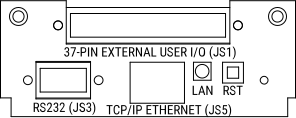
LXI TCP/IP Ethernet RJ45 (Option +LXI)
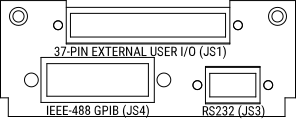
IEEE-488 GPIB (Option +GPIB)
Referenced to Earth ground; isolated from power supply output
See User Manual for pin layout
Accuracy Specifications
External User I/O Specifications
Current output monitoring: 100 Ω
+10V reference: 1 Ω
Output: 0 to 5 Vdc, 5 mA drive capacity
Physical Specifications
3.50" H x 19" W x 24" D (8.89 x 48.26 x 60.96 cm)
45 lbs (20.41 kg)
3.50" H x 19" W x 24" D (8.89 x 48.26 x 60.96 cm)
47 lbs (21.32 kg)
3.50" H x 19" W x 24" D (8.89 x 48.26 x 60.96 cm)
48 lbs (21.77 kg)
3.50" H x 19" W x 24" D (8.89 x 48.26 x 60.96 cm)
48 lbs (21.77 kg)
3.50" H x 19" W x 24" D (8.89 x 48.26 x 60.96 cm)
48 lbs (21.77 kg)
Environmental Specifications
0.06%/°C of maximum output current
Regulatory Specifications
CISPR 22 / EN 55022 Class A
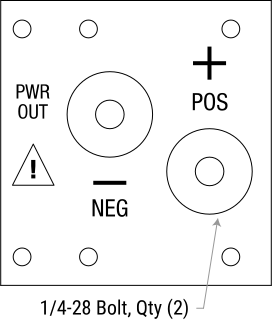
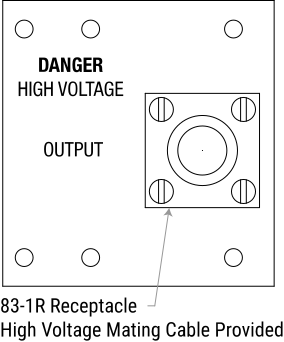
Im Folgenden finden Sie vektorisierte Diagramme für die XR Series. Beachten Sie den Downloads Abschnitt für herunterladbare Zeichnungen.



Integrierte Optionen
Für Magna-Power Produkte sind integrierte Standardoptionen verfügbar, mit denen sich die Leistung und die Kommunikationsschnittstellen des Produkts an die jeweilige Anwendung anpassen lassen.
- Option
- +HS
- Option
- +GPIB

Zubehör
Für dieses Produkt sind externes Zubehör und Integrationsdienste verfügbar.