


Serie SL
Programmable DC Power Supply
- Dimensione
- 1U
- Potenza
- 1.5 kW to 10 kW
- Prodotto
- USA
- Tempo di costruzione
- 10-12 weeks
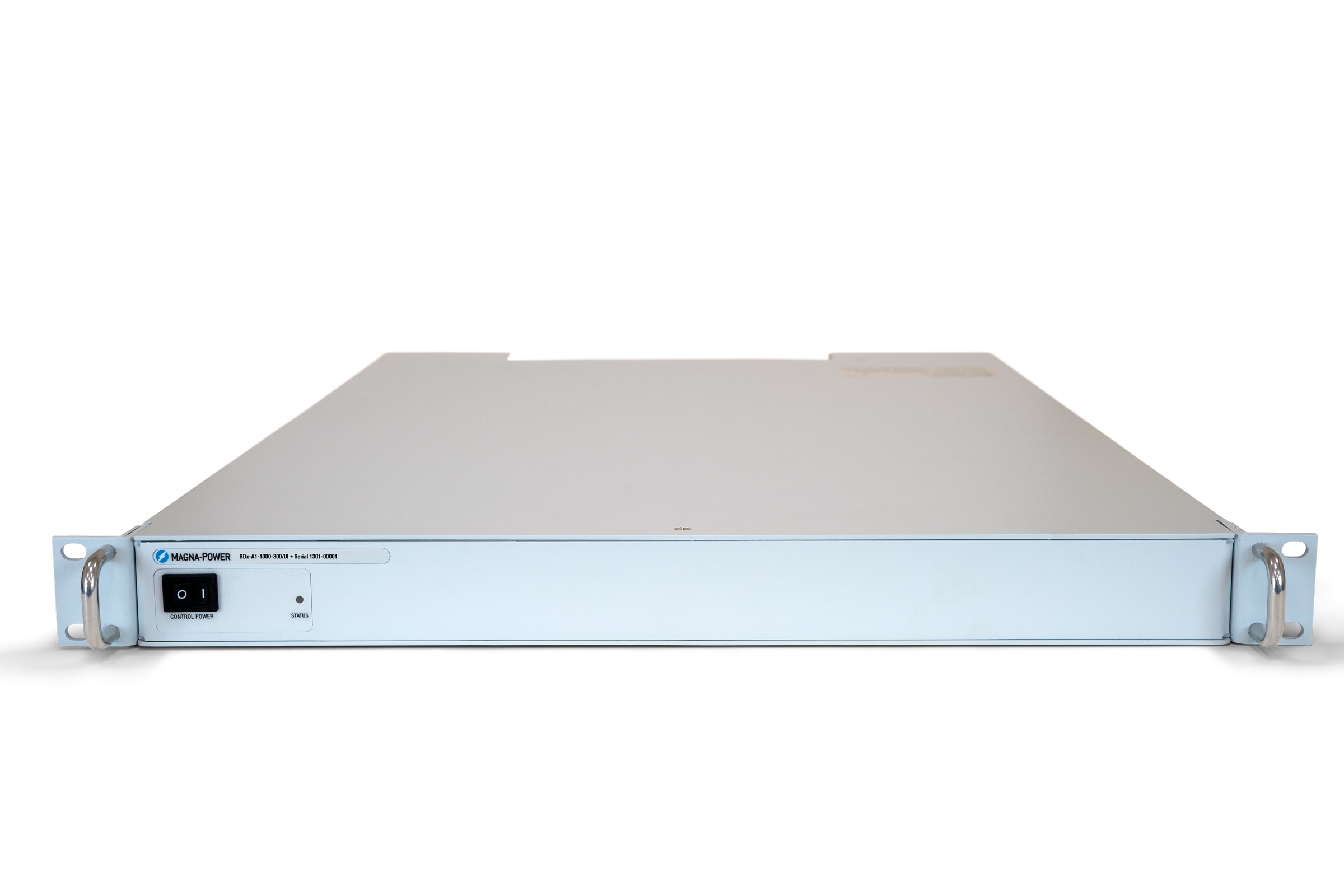
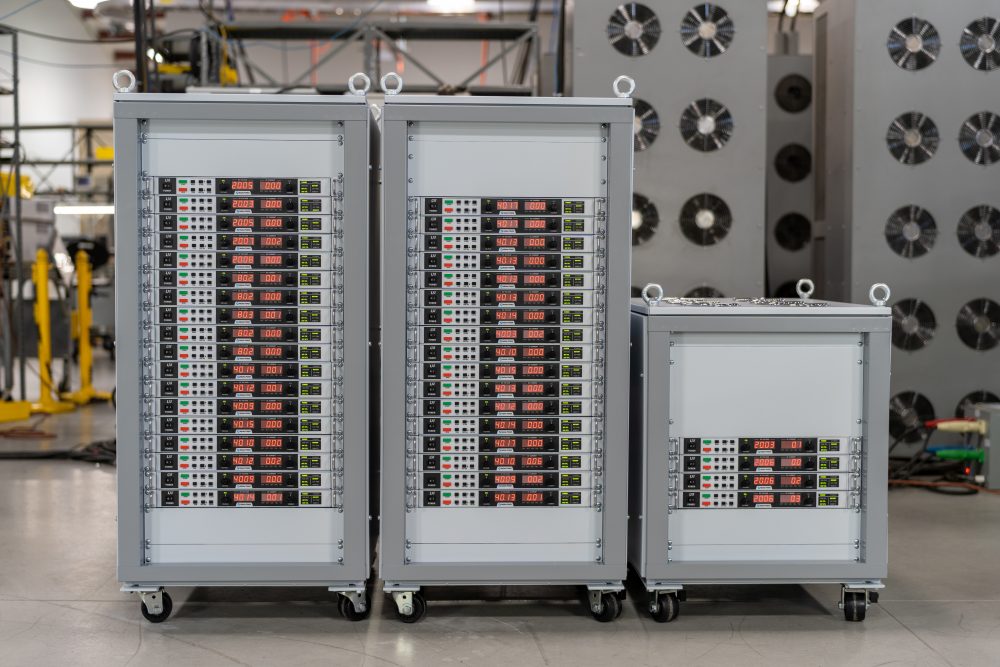
The SL Series builds on nearly 40 years of power supply innovation at Magna-Power, designed from the ground up to meet the highly reliable power dense demands of ATE system integrators through Magna-Power's signature current-fed power processing topology. Utilizing state-of-the-art semiconductors and innovative internally designed and manufactured heat sinks, the SL Series offers industry-leading 1U (1.75” height) programmable power levels with models at 1.5 kW, 2.6 kW, 4 kW, 6 kW, 8 kW, and 10 kW while still maintaining an ambient operating temperature rating up to 50°C.




Parla con un esperto


Fast, accurate power delivery with controls and options tailored to your needs
Potenza e prestazioni 1U senza pari
Uscita pulita e precisa con risposta rapida per sistemi esigenti.
Gli alimentatori della Serie SL offrono una risposta transitoria rapida, programmazione e misurazione ad alta precisione, risoluzione a 12 bit e basso ripple in uscita, il tutto in un formato 1U leader della categoria con efficienza fino al 95%. Con funzionamento in tensione costante o corrente costante e crossover automatico, si stabilizzano rapidamente dopo variazioni di carico (recupero dei transitori di carico nell'ordine di pochi millisecondi) e mantengono i valori target con estrema precisione, con accuratezza di programmazione in tensione e corrente fino a ±0,075% del fondo scala—ideali per applicazioni di test di precisione, burn-in e processi in cui sia la dinamica che l'accuratezza sono fondamentali.
Configurato su ordinazione con opzioni integrate
Funzionalità standard avanzate, estendibili quando necessario.
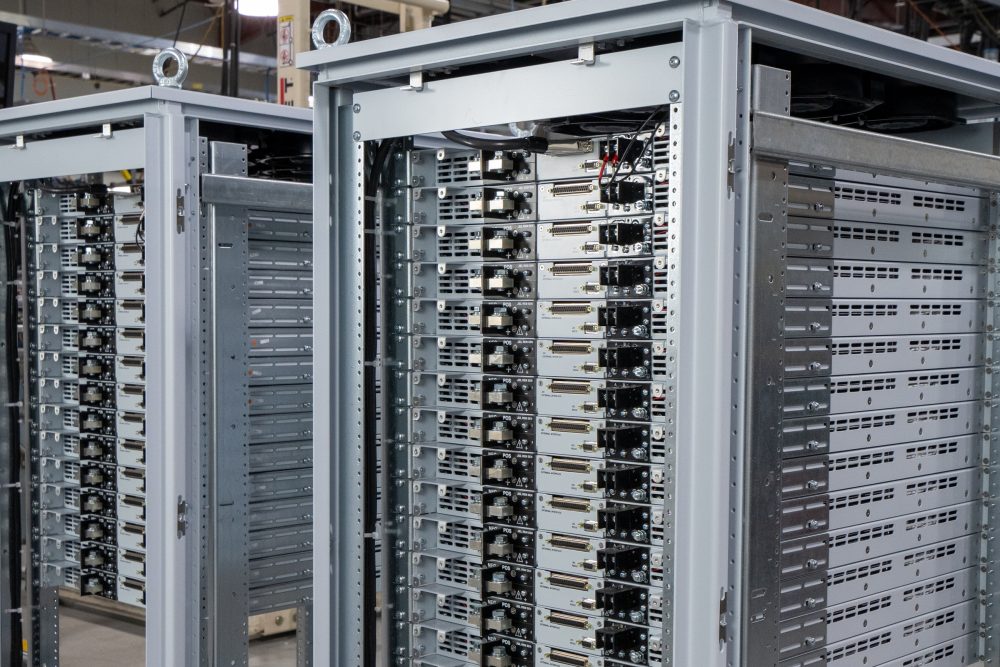
SL Series starts with a strong base: SCPI over RS232, isolated 37-pin user I/O, LabVIEW and IVI drivers, and Remote Interface Software included. When applications demand more, fully integrated options tailor performance, connectivity, and mechanics—without external boxes or ad-hoc wiring.
Standard SCPI computer controls, RS232, isolated 37-pin analog/digital I/O, LabVIEW & IVI drivers, RIS software.
-
High Slew Rate Output (+HS) for higher bandwidth and faster programmed rise times.
-
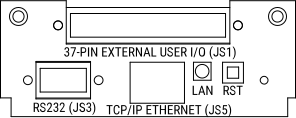
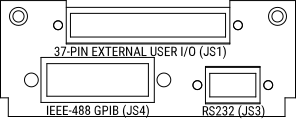
Connectivity options LXI TCP/IP Ethernet (+LXI) and IEEE-488 GPIB (+GPIB).
-
Ruggedized (+RUG) for MIL-STD shock & vibration
Controllo stepless dal pannello frontale con opzione pannello cieco
Controllo diretto dove serve, nascosto dove non serve.
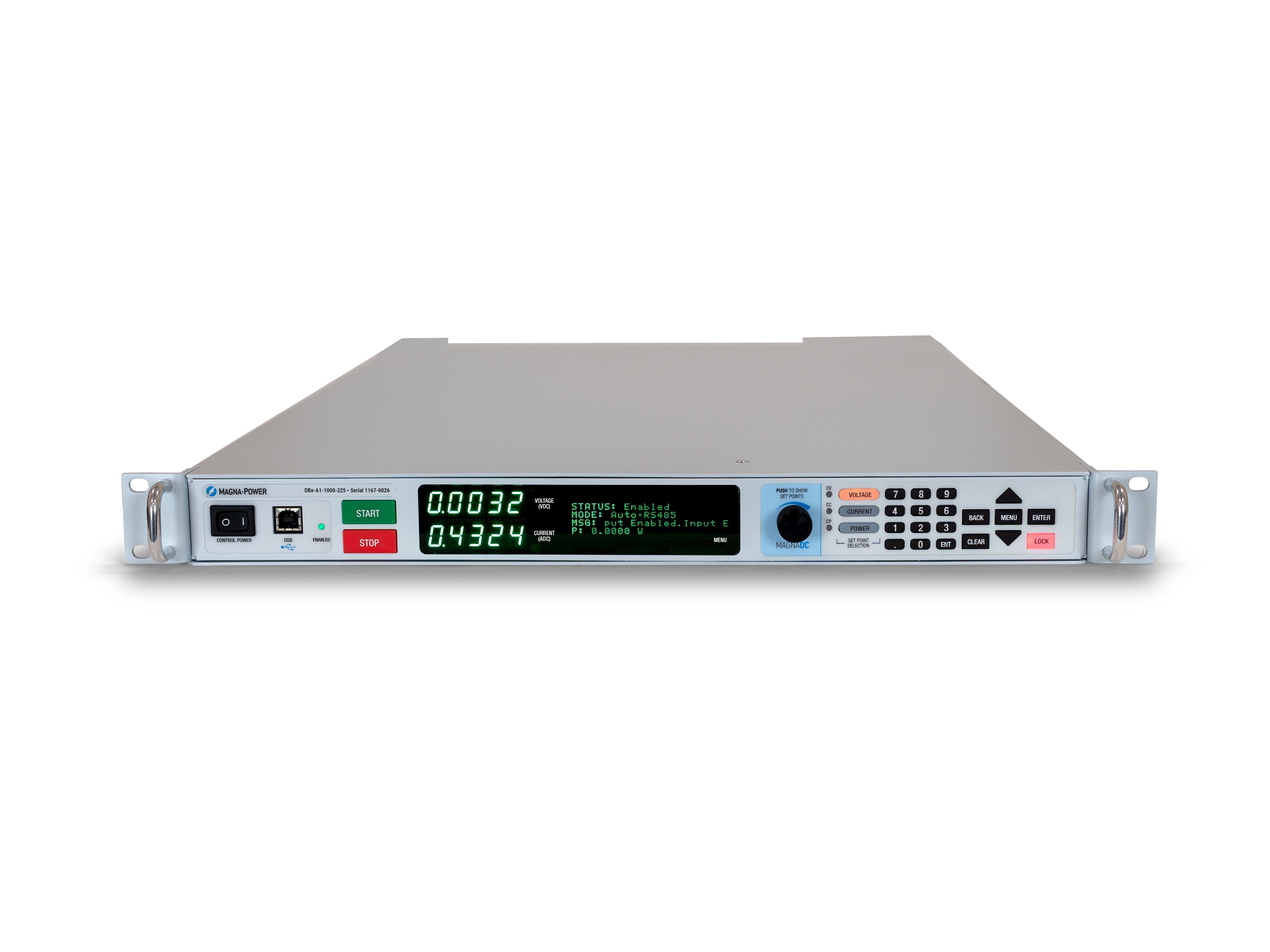
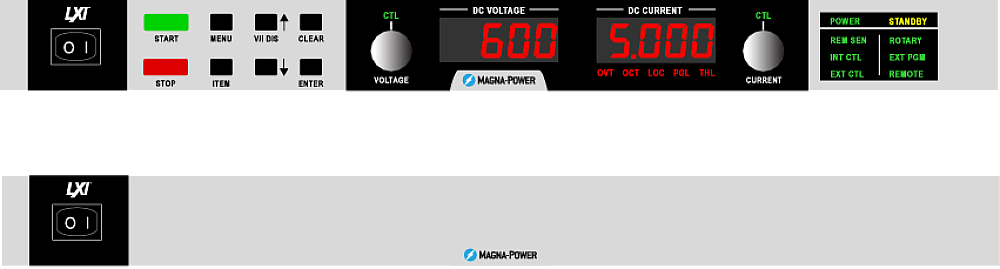
Il pannello frontale SL standard offre controllo rotativo e a tasti, misurazione digitale luminosa e indicatori di stato chiari, consentendo agli operatori di configurare i setpoint, avviare e arrestare l'alimentatore e verificare lo stato del sistema a colpo d'occhio. Per gli OEM e gli strumenti di produzione, il pannello frontale cieco opzionale (versione C) elimina completamente i controlli locali, mantenendo il pieno controllo tramite le interfacce di comunicazione e l'I/O utente posteriore a 37 pin, garantendo sistemi sicuri, ordinati e a prova di operatore.
Rugged by design: safety + reliability, as you'd expect from Magna-Power.

Elaborazione di potenza affidabile a corrente impressa
Robusto per design: topologia autoprotettiva per la massima operatività.
The SLx Series uses a high-frequency, current-fed architecture that adds a control stage beyond conventional voltage-fed designs. This topology inherently limits fault energy—avoiding fast-rising current spikes and magnetic core saturation so the supply self-protects and your load stays safe. Paired with state-of-the-art SiC power semiconductors, SLx delivers class-leading power density, efficiency, and reliability, including continuous full-power operation up to 50°C ambient.
- Current-fed architecture with an added control stage vs. voltage-fed.
- Inherent surge immunity—no current spikes or core saturation.
- Self-protecting behavior under fault conditions.
- SiC devices for high density and efficiency; full power to 50°C.

Caratteristiche di sicurezza e interlock
Avvio graduale, protezione programmabile e disconnessione meccanica della linea per una sicurezza reale.
MagnaDC supplies start gently and watch continuously. A soft-start stage keeps inrush below steady-state draw, while built-in diagnostics monitor line, thermal, and control conditions. In standby or on a diagnostic fault, an embedded AC contactor mechanically disconnects the mains, assuring the unit only processes power when intended. Faults are shown on the front-panel status display, through 5V digital outputs, and are queryable via SCPI.
-
Programmable trips: Over voltage (OVT) and over current (OCT)/
-
Control integrity: Program-line over-voltage detection.
-
Thermal protection: Over temperature on internal heatsinks.
-
Interlock/E-stop fault monitoring as a standard diagnostic.
-
Field integration: 5V interlock input (with 5V reference) for a dry-contact, latching inhibit with control power maintained.
From lab scripts to factory PLCs, flexible programming & integration.
Integrazione software semplificata
Comandi leggibili, risultati rapidi—funziona con qualsiasi linguaggio.
Gli alimentatori MagnaDC offrono un'API testuale chiara con SCPI nativo, un linguaggio di comando basato su ASCII inviato tramite comunicazioni socket. Oltre 40 comandi ben documentati coprono avvio/arresto, set point per tensione, corrente, misurazioni ad alta precisione e configurazione completa—così i vostri script e sistemi passano rapidamente dal proof-of-concept alla produzione.
- Set di comandi SCPI con comportamento coerente.
- Avvio/arresto e protezioni: abilitazione dell'uscita, impostazione dei limiti di intervento, interrogazione dello stato.
- Letture ad alta precisione: tensione, corrente, potenza e feedback di sensing.
- Documentazione ed esempi orientati allo sviluppatore.
import serial
magnaPower = serial.Serial(port='COM4', baudrate=19200)
magnaPower.write('*IDN?\n'.encode())
print magna_power.readline()
magnaPower.write('VOLT 0\n'.encode())
magnaPower.write('CURR 0\n'.encode())
magnaPower.write('OUTP:START\n'.encode())
magnaPower.write('VOLT 270\n'.encode())
currSetPoints = [50, 100, 150, 250]
for currSetPoint in currSetPoints:
    print 'Setting Current to %s A' % currSetPoint
    magnaPower.write('CURR {0}\n'.format(currSetPoint).encode())
    magnaPower.write('MEAS:VOLT?\n'.encode())
    print magnaPower.readline()
    time.sleep(20)
magnaPower.write('OUTP:STOP\n'.encode())
magnaPower.close()
magna_power = serial('COM4', 'BaudRate', 19200);
fopen(magnaPower);
fprintf(magnaPower,'*IDN?');
idn = fscanf(magnaPower);
fprintf(magnaPower,'VOLT 0');
fprintf(magnaPower,'CURR 0');
fprintf(magnaPower,'OUTP:START');
fprintf(magnaPower,'VOLT 270');
for currSetPoint in [50, 100, 150, 250]
    display('Setting Current to '+currSetPoint+' A');
    fprintf(magnaPower, 'CURR '+currSetPoint);
    fprintf(magnaPower,'MEAS:VOLT?');
    display(fscanf(magnaPower));
    pause(20);
end
#include <stdio.h>
#include <stdint.h>
#include <string.h>
#include <windows.h>

int main()
{
    printf("Opening connection.\n");

    uint8_t recvBuffer[sizeof(uint8_t) * 256];
    memset(recvBuffer, 0, 256);

    // Choose the serial port name.
    // COM ports higher than COM9 need the \\.\ prefix, which is written as
    // "\\\\.\\" in C because we need to escape the backslashes.
    const char* device = "\\\\.\\COM4";

    // Choose the baud rate (bits per second).
    uint32_t baud_rate = 19200;

    HANDLE port = open_serial_port(device, baud_rate);
    if (port == INVALID_HANDLE_VALUE) { return 1; }

    char* scpiCmd = (char*)"*IDN?\n";
    size_t cmdLen = strlen(scpiCmd);
    int result = write_port(port, (uint8_t*)scpiCmd, cmdLen);
    if (result < 0)
        return -1;

    result = read_port(port, recvBuffer, 256);
    printf("Sent: %s\nReceived: %s\n", scpiCmd, recvBuffer);

    scpiCmd = (char*)"VOLT 0\n";
    cmdLen = strlen(scpiCmd);
    result = write_port(port, (uint8_t*)scpiCmd, cmdLen);
    if (result < 0)
        return -1;

    scpiCmd = (char*)"CURR 0\n";
    cmdLen = strlen(scpiCmd);
    result = write_port(port, (uint8_t*)scpiCmd, cmdLen);
    if (result < 0)
        return -1;

    scpiCmd = (char*)"OUTP:START\n";
    cmdLen = strlen(scpiCmd);
    result = write_port(port, (uint8_t*)scpiCmd, cmdLen);
    if (result < 0)
        return -1;

    scpiCmd = (char*)"VOLT 270\n";
    cmdLen = strlen(scpiCmd);
    result = write_port(port, (uint8_t*)scpiCmd, cmdLen);
    if (result < 0)
        return -1;

    char setPoints[4][5] = {"50", "100", "150", "200"};
    char setPointBuffer[40];
    scpiCmd = (char*)"MEAS:VOLT?\n";

    for (int i = 0; i < 4; i++)
    {
        sprintf(setPointBuffer, "CURR %s\n", setPoints[i]);
        printf("Setting current to %s A\n", setPoints[i]);
        cmdLen = strlen(setPointBuffer);
        result = write_port(port, (uint8_t*)setPointBuffer, cmdLen);
        if (result < 0)
            return -1;
        memset(recvBuffer, 0, 256);
        result = read_port(port, recvBuffer, 256);
        printf("Received: %s\n", recvBuffer);
        Sleep(20000);  // 20000ms = 20s
    }

    scpiCmd = (char*)"OUTP:STOP\n";
    cmdLen = strlen(scpiCmd);
    result = write_port(port, (uint8_t*)scpiCmd, cmdLen);
    if (result < 0)
        return -1;

    CloseHandle(port);

    printf("Connection closed.\n");
    return 0;
}
using System;
using System.IO.Ports;
using System.Threading;

namespace SerialCommunicationInCSharp
{
  public class Program
  {
    static bool _continue;
    static SerialPort serialPort;

    public static void Main(string[] args)
    {
      Thread readThread = new Thread(Read);

      Console.WriteLine("Opening connection.");

      // Create a new SerialPort object with default settings.
      serialPort = new SerialPort("COM4", 19200, Parity.None, 8, StopBits.One);

      // Set the read/write timeouts
      serialPort.ReadTimeout = 500;
      serialPort.WriteTimeout = 500;

      serialPort.Open();
      _continue = true;
      readThread.Start();

      Console.WriteLine("Sending: *IDN?");
      serialPort.WriteLine("*IDN?");

      serialPort.WriteLine("VOLT 0");
      serialPort.WriteLine("CURR 0");
      serialPort.WriteLine("OUTP:START");
      serialPort.WriteLine("VOLT 270");

      string[] currSetPoints = { "50", "100", "150", "250" };
ß
      for(int i = 0; i < currSetPoints.Length; i++)
      {
        serialPort.WriteLine(String.Format("'CURR {0}", currSetPoints[i]));
        serialPort.WriteLine("MEAS:VOLT?");
        Thread.Sleep(20000);
      }

      serialPort.WriteLine("OUTP:STOP");

      Console.WriteLine("Closing connection.");
      _continue = false;
      serialPort.Close();
      }

    public static void Read()
    {
      while (_continue)
      {
        try
        {
          string message = serialPort.ReadLine();
          Console.WriteLine("Received: " + message);
        }
        catch (TimeoutException) { }
      }
    }
  }
}

User I/O esterno per controllo PLC o simulazione PHIL
Collegalo come un modulo I/O—non è necessario alcun isolamento aggiuntivo.
Via the included rear 37-pin User I/O connector, MagnaDC supplies can be fully driven and monitored by external signals or a PLC. Voltage, current, OVT, and OCT set points are programmed with 0–10 V analog inputs, while each diagnostic condition has its own +5V digital status pin. Built-in +2.5V, +5V, and +10V reference rails let you use dry contacts without adding external supplies. All I/O is isolated from the output and referenced to earth ground as standard.
-
0–10 V analog programming for V, I, OVT, and OCT.
-
Per-fault digital outputs: each diagnostic has its own +5V pin.
-
Isolated user I/O referenced to earth ground—no extra isolators.
-
With High Slew Rate Output (+HS), high-bandwidth response and fast rise times support HIL/PHIL simulation applications.
Funzionamento master-slave ad alte prestazioni
Scala tensione o corrente senza sacrificare le prestazioni.
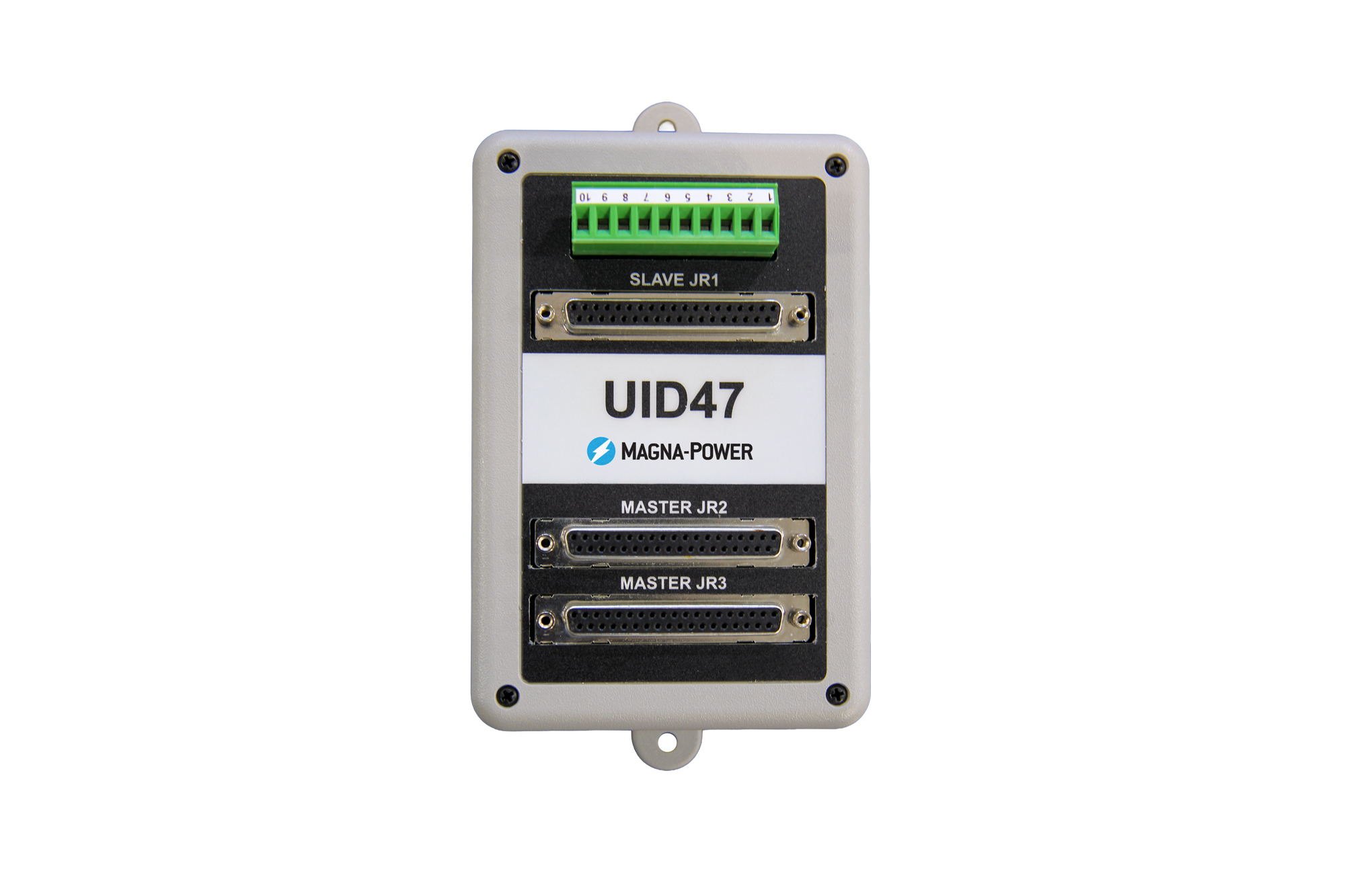
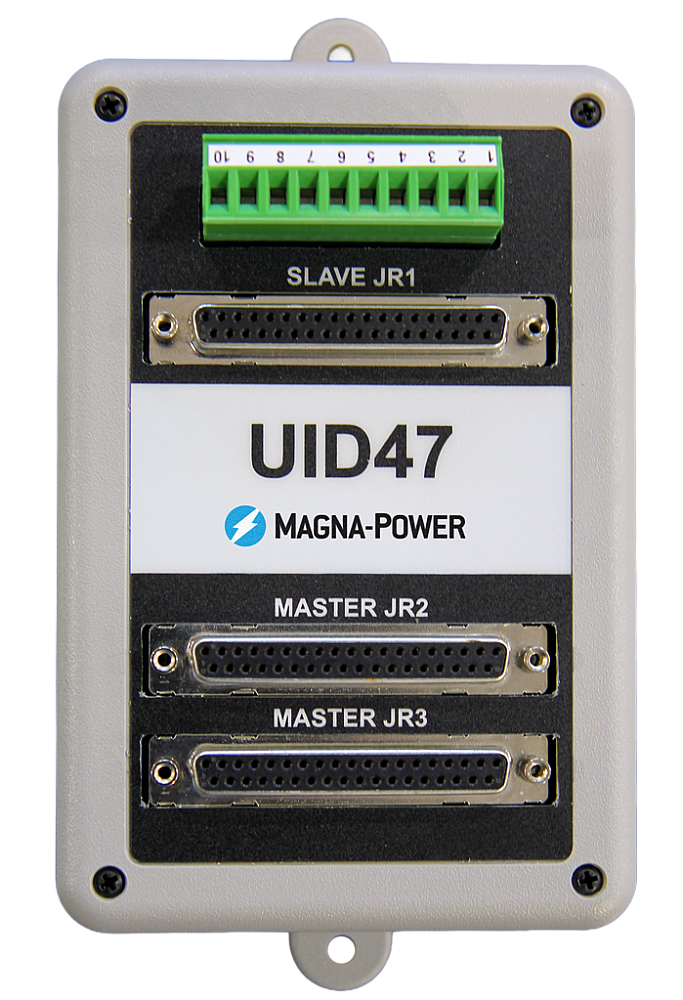
All MagnaDC supplies support master-slave operation, using gate-drive signals from the master when configured for parallel, so the whole stack behaves like a single supply—with one control loop and no noisy long analog references. The optional UID47 accessory simplifies wiring for series or parallel sets with near-equal sharing.
-
Single control loop parallel operation: Master gate-drive to slaves for consistent dynamics.
-
Plug & play with the UID47, enabling parallel or series stacks with current/voltage sharing.
-
Series up to the DC isolation rating without added hardware.
No additional ORing diodes required for parallel operation.
Software Magna-Power, driver LabVIEW e IVI
Dal pannello frontale virtuale all'automazione completa, pronti all'uso.
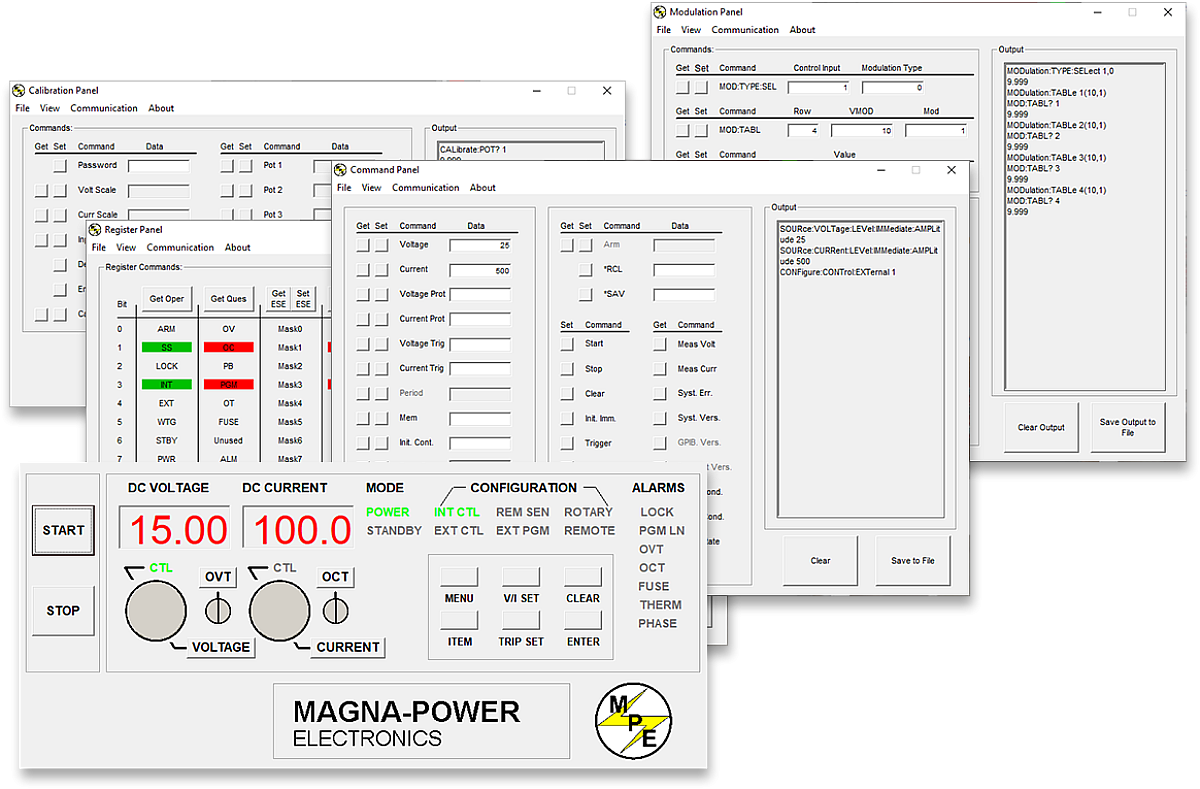
Ogni alimentatore MagnaDC include un driver IVI e un driver NI LabVIEW con un set completo di VI, oltre a programmi di esempio per comunicare con l'hardware in pochi minuti. Per il controllo diretto in stile pannello frontale da PC, il Remote Interface Software di Magna-Power offre una visione completa dell'alimentatore: dai comandi e registri alla calibrazione e al firmware.
-
Driver IVI e NI LabVIEW inclusi con set completo di VI.
-
Programmi di esempio per avviare rapidamente integrazione e test.
-
Remote Interface Software con:
-
Pannello frontale virtuale per il controllo manuale
-
Pannello comandi per esplorare e inviare comandi
-
Pannello registri per il monitoraggio dello stato in tempo reale
-
Pannello calibrazione per i potenziometri digitali interni
-
Pannello firmware per aggiornamenti in loco
-
Pannello modulazione per emulare profili non lineari
-
-
Tutte le interfacce di comunicazione supportate su software e driver per un'esperienza di programmazione coerente.
State-of-the-art USA manufacturing with worldwide support

Made in the USA
Produzione verticalmente integrata per un controllo qualità completo.
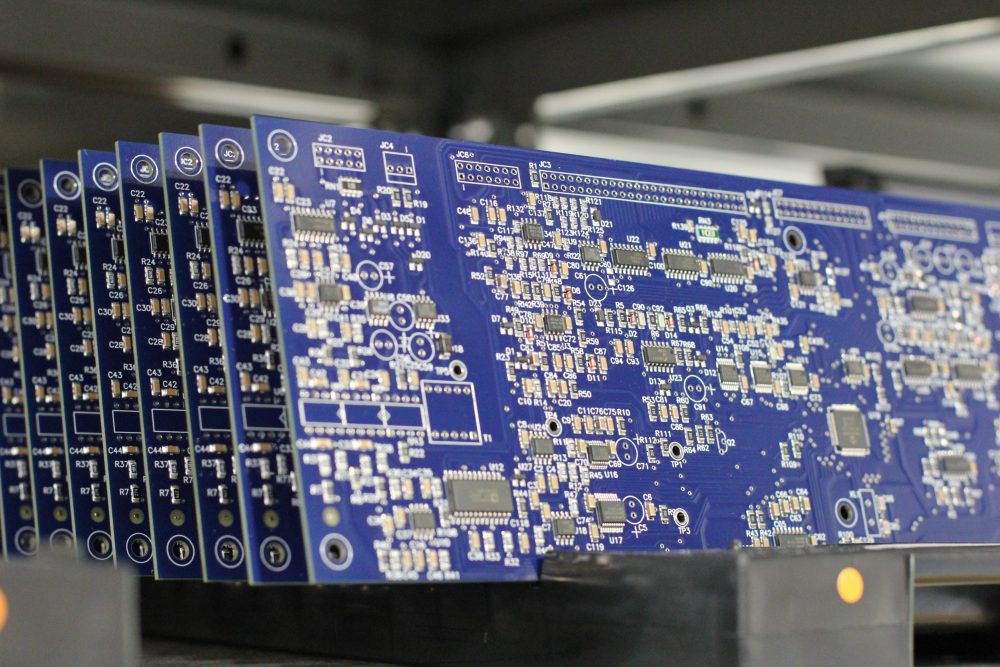
I prodotti Magna-Power sono progettati, costruiti, testati e assistiti presso la sede centrale di Magna-Power di 73.500 sq-ft a Flemington, New Jersey, dove lavorazioni metalliche, componenti magnetici, assemblaggio PCB e rodaggio vengono eseguiti internamente per un controllo rigoroso su qualità, costi e tempi di consegna.
- Prodotto negli USA: ingegneria, produzione e assistenza sotto un unico tetto.
- Produzione interna: lavorazioni metalliche, componenti magnetici, PCB SMT e finiture.
- Affidabilità comprovata: ogni unità completamente testata, calibrata e sottoposta a rodaggio.
Assistenza mondiale e supporto ricambi OEM
Competenza di fabbrica, risposta locale.
Magna-Power supporta i propri prodotti con centri di assistenza di fabbrica e autorizzati in Nord America, Europa, Regno Unito, Asia-Pacifico, Asia orientale e Sud America, utilizzando procedure di fabbrica e ricambi originali per ripristinare le unità alle specifiche originali, in garanzia e fuori garanzia.
- Copertura globale: sede centrale nel New Jersey e centri di assistenza autorizzati regionali.
- Riparazioni uniformi: diagnostica di fabbrica, istruzioni operative e schemi di sistema.
- Ricambi OEM originali: gruppi di ricambio testati per un servizio prevedibile e con tempi di fermo ridotti.
Guida all'ordinazione dei modelli
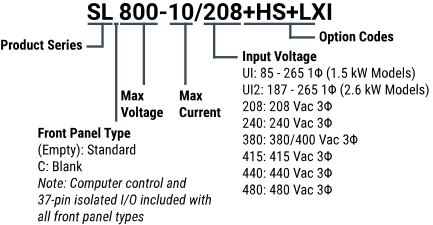
Sia per l'ordinazione che per la produzione, i modelli SL Series sono definiti in modo univoco da diverse caratteristiche chiave, come illustrato nel diagramma seguente:
SL Series Modelli
Ci sono 127 modelli diversi nella SL Series con livelli di potenza compresi tra: 1.5 kW, 2.6 kW, 4 kW, 6 kW, 8 kW, 10 kW. Per determinare il modello appropriato:
- Seleziona la tensione max desiderata (Vdc) dalla colonna più a sinistra.
- Seleziona la corrente max desiderata (Adc) dalla stessa riga che contiene la tensione max desiderata.
- Costruisci il tuo numero di modello secondo la guida all'ordinazione dei modelli.
| Max Voltage Vdc |
1.5 kW | 2.6 kW | 4 kW | 6 kW | 8 kW | 10 kW | Ripple mVrms |
Efficiency |
|---|---|---|---|---|---|---|---|---|
| Max Current Adc | ||||||||
| 5 | 250 | — | — | — | — | — | 30 | 84% |
| 10 | 150 | 250 | — | — | — | — | 30 | 89% |
| 16 | 93 | 162 | 250 | — | — | — | 40 | 89% |
| 20 | 75 | 130 | 200 | 250 | — | — | 40 | 90% |
| 25 | 60 | 104 | 160 | 240 | — | — | 50 | 91% |
| 32 | 46 | 81 | 125 | 186 | 250 | — | 60 | 91% |
| 40 | 37 | 65 | 100 | 150 | 200 | 250 | 80 | 91% |
| 50 | 30 | 52 | 80 | 120 | 160 | 200 | 70 | 92% |
| 60 | 25 | 43 | 66 | 100 | 133 | 166 | 100 | 93% |
| 80 | 18 | 32 | 50 | 75 | 100 | 125 | 120 | 93% |
| 100 | 15 | 26 | 40 | 60 | 80 | 100 | 120 | 93% |
| 125 | 12 | 20 | 32 | 48 | 64 | 80 | 110 | 93% |
| 160 | 9 | 16 | 25 | 36 | 50 | 60 | 110 | 93% |
| 200 | 7.5 | 13 | 20 | 30 | 40 | 50 | 110 | 94% |
| 250 | 6 | 10.4 | 16 | 24 | 32 | 40 | 110 | 94% |
| 300 | 5 | 8.6 | 13.2 | 20 | 26.4 | 33.3 | 120 | 94% |
| 375 | 4 | 6.9 | 10.4 | 16 | 21.3 | 26.5 | 120 | 94% |
| 400 | 3.7 | 6.5 | 10 | 15 | 20 | 25 | 170 | 95% |
| 500 | 3 | 5.2 | 8 | 12 | 16 | 20 | 250 | 95% |
| 600 | 2.5 | 4.3 | 6.4 | 10 | 13.3 | 16.5 | 250 | 95% |
| 800 | 1.8 | 3.2 | 5 | 7.5 | 10 | 12.5 | 250 | 95% |
| 1000 | 1.5 | 2.6 | 4 | 6 | 8 | 10 | 400 | 95% |
| 1250 | 1.2 | 2 | 3.2 | 4.8 | 6.4 | 8 | 700 | 95% |
| 1500 | 1 | 1.7 | 2.6 | 4 | 5.3 | 6.6 | 1000 | 95% |
| AC Input Voltage Vac |
Input Current Per Phase Aac | |||||||
| UI (85-265 Vac, 1Φ) | 21 - 7 | — | — | — | — | — | ||
| UI2 (187-265 Vac, 1Φ) | — | 16 - 12 | — | — | — | — | ||
| 208/240 Vac, 3Φ | 6 | 11 | 16 | 24 | 32 | 39 | ||
| 380/415 Vac, 3Φ | 5 | 8 | 11 | 16 | 19 | 22 | ||
| 440/480 Vac, 3Φ | 4 | 6 | 9 | 14 | 17 | 19 | ||
Le specifiche sono soggette a modifiche senza preavviso. Salvo diversa indicazione, tutte le specifiche sono misurate ai valori nominali massimi del prodotto.
AC Input Specifications
208-240 Vac (UI2: Universal input 2; 2.6 kW Models)
240 Vac (operating range 216 to 264 Vac)
380 Vac (operating range 342 to 440 Vac)
415 Vac (operating range 373 to 456 Vac)
440 Vac (operating range 396 to 484 Vac)
480 Vac (operating range 432 to 528 Vac)
> 0.82 at maximum power for models with 3Φ AC input
DC Output Specifications
Current mode: ± 0.02% of full scale
Current mode: ± 0.04% of full scale
Model specific. Refer to chart of available models.
< 200 ms for a programmed output current change from 0 to 63%
< 10 ms for a programmed output current change from 0 to 63%
2 Hz with remote analog current programming
45 Hz with remote analog current programming
Programming Interface Specifications
LXI TCP/IP Ethernet RJ45 (Option +LXI)
IEEE-488 GPIB (Option +GPIB)
Referenced to Earth ground; isolated from power supply output
See User Manual for pin layout
Accuracy Specifications
External User I/O Specifications
Current output monitoring: 100 Ω
+10V reference: 1 Ω
Output: 0 to 5 Vdc, 5 mA drive capacity
Physical Specifications
1.75" H x 19" W x 24" D (4.4 x 48.3 x 61.0 cm)
32 lbs (14.52 kg)
1.75" H x 19" W x 24" D (4.4 x 48.3 x 61.0 cm)
34 lbs (15.42 kg)
1.75" H x 19" W x 24" D (4.4 x 48.3 x 61.0 cm)
35 lbs (15.88 kg)
1.75" H x 19" W x 24" D (4.4 x 48.3 x 61.0 cm)
35 lbs (15.88 kg)
1.75" H x 19" W x 24" D (4.4 x 48.3 x 61.0 cm)
36 lbs (16.33 kg)
1.75" H x 19" W x 24" D (4.4 x 48.3 x 61.0 cm)
37 lbs (16.78 kg)
Environmental Specifications
0.06%/°C of maximum output current
Regulatory Specifications
CISPR 22 / EN 55022 Class A
CSA C22.2 No. 61010-1:12; A1:2018
UL 61010-1:Ed.3,2012(R2019)
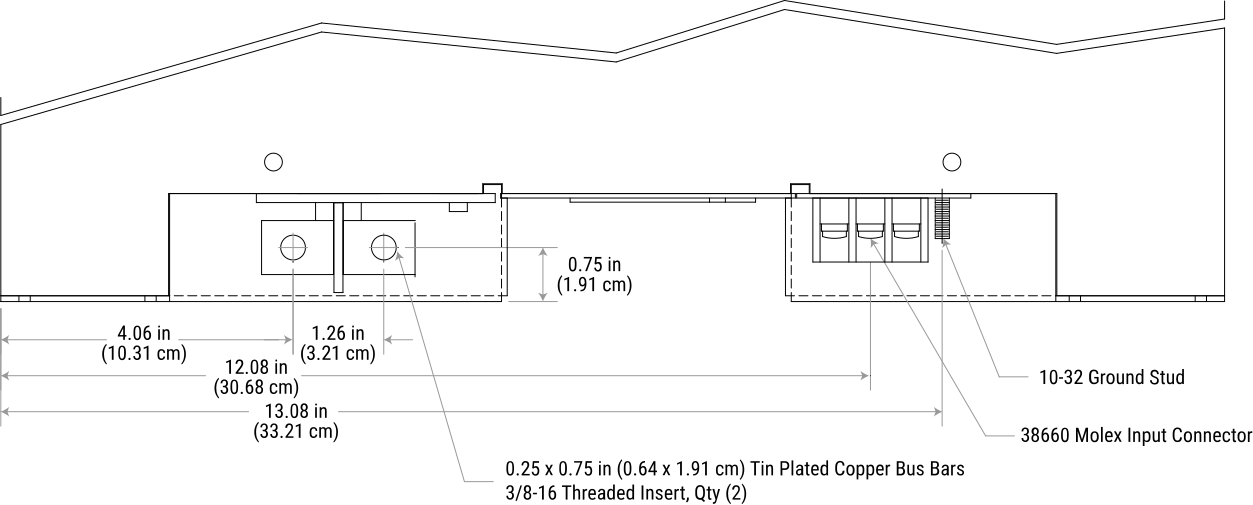
I seguenti sono diagrammi vettorizzati per il SL Series. Consulta la Download sezione per i disegni scaricabili.



Opzioni integrate
Per i prodotti Magna-Power sono disponibili opzioni integrate standard, che consentono di adattare le prestazioni e le interfacce di comunicazione del prodotto alla specifica applicazione.
- Opzione
- +HS
- Opzione
- +GPIB

Accessori
Accessori esterni e servizi di integrazione disponibili per questo prodotto.